Nevermind The Posers

See ya in the pit.

Happy Friday! May 13, 2011

Rock the hell out of your weekend!
– TNT

“American Trash” by Innerpartysystem.  Yes, this is my nice way of telling you that you are not the most important person in America.  Go live your own life instead of idolizing reality TV non-stars, turning your skin orange by laying in cancer boxes and pretending your hot shit when you’re not.  Actually, this is my way of telling our non-poser readers to tell all the posers out there, or better yet “American Trash,” to get a life and live it.

“Sail” by AWOLNATION.  I heard this song on 101.9 WRXP on my drive home from what felt like the longest week ever and it made my day, perhaps even my weekend.  Great song and video.


The Musical Creative Process April 22, 2011

By Sean Davis

Musicians take a variety of approaches to composition; in the world of popular music alone several schools of thought inform the process of song writing.  John Lennon insisted on writing meaningful, poetic lyrics bathed in metaphors and expression; while Paul McCartney’s focus was on musical precision, making sure every note was carefully planned and perfectly executed.  McCartney was well-known for filling in melodies with nonsensical syllables, replacing them with words later (and often with John’s aid).  This compositional discontinuity is found not only in modern popular styles, but also throughout all western musical history.  Chopin was famous for laboring over minute details for hours, trying to discover the perfect combination of tones.  Monteverdi believed in the concept of text dictating the flow and direction of the music, going so far as to break the fundamental rules governing musical composition at the time.  Regardless of how one composes, the end result will almost always beg questions from listeners.  What inspired such and such song?  What did you mean by this lyric?  I really love the chords in that song, where did you come up with that?  It is these questions, and more, that spawned the fields of musical criticism, music theory, and continue to guide people into a musical life.  The problem with such questions, however, is that the creative process is almost always just as unique as the individual creator; there is no blanket truth we can ascribe to song-writers and composers that will reveal an objective musical process for creating good music.  What we can discover through analytical and historic study, are commonalities that might provide useful insight into how we can discover our own unique musical identities.  By understanding what aided those who came before us, we can capitalize on that information, and possibly use it to enhance the evocative powers of our own compositions.
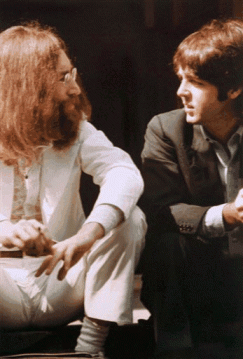
Let us examine the two different approaches used by Beatles John Lennon and Paul McCartney.  There are distinct advantages and disadvantages to both systems, which is probably why the music that came from the collaboration between these two was so expressive.  Lennon’s practice of allowing the text do the work for you is not new, as mentioned earlier the baroque composer Monteverdi famously claimed that the music should follow the expressive motions of the text.  This idea can create wonderfully striking relationships with the listener, every word reflected in some musical gesture; we see this notion take form in Lennon’s famous single “Imagine,” the harmony is relatively simple, however the focus on major 7ths and circuitous, repetitive progressions signify a dream-like, ethereal atmosphere.  We can surmise from Lennon’s view on composition that he probably wrote the words first, and then crafted the music around them, trying to match the emotions he felt were in the lyrics.  Composing like this is effective for many, however it does exhibit a few pitfalls.  When the music takes a subordinate role to lyrics, very often it fails to express all that it can.  In other words, the music may not live up to its full potential.  I may be crucified for suggesting this, but in my opinion this dilemma is the main problem with the music of Bob Dylan.  Lyrically speaking, his songs are evocative, poetic and worthy of great praise; however, the music is stale, boring, and goes on far too long without variation.  Also, many times when the words predate the music, it can be difficult to find a way to seamlessly integrate the text with the musical syntax.  Clunky transitions, awkward phrases and misconception of text are often the result of a poor marriage between lyrics and music.

Paul McCartney approached song-writing from a different point of view, he would sweat over the harmony or melody of a song long before even considering the words.  When a composer or song-writer creates in this manner the instrumental aspect of the music tends to be just as important, if not more so than the words.  Focusing on the purely musical allows for a wider range of expression and interaction between musical devices, thus increasing the music’s ability to signify deep and meaningful concepts.  When listening to the opening bars of “You Never Give Me Your Money,” one can commiserate with the singer’s confusion and dejection.  The progression sequences down by fifths, cycling through all of the chords in A minor.  The descending lines coupled with the interaction of the piano chord voices evoke a musical atmosphere separate from the lyrics.  When we finally hear the words, the music has already set the scene for us, coloring our interpretation from the onset.  These kinds of expressive devices come from a learned set of syntactical symbols, arranged in various ways to extract an emotional (or physical, or psychological, etc…) response.  Most people are familiar in some way with how most songs unfold: two or more contrasting sections presented with lyric alteration guiding the listener from beginning to end.  Of course there are any number of variations on this framework; the fact is that because we know what to expect, due to exposure to these symbols over and over again (via radio, television, dance clubs, internet, etc…), we develop a sense of music’s ability to signify.  The skilled composer and/or song-writer has such an understanding of these symbols that she/he is able to utilize them to either fulfill, or stifle, an expectation.  However, ignoring the capacity of lyrics to resonate with individuals can cause even the most well-constructed songs to fail to connect.  Sometimes when composers, especially song-writers, place too much emphasis on the instrumental and non-verbal in their songs the listener is left with a vague wash of expression devoid of any real form.  In the worst case scenario the words and music are almost contradictory, would anyone have listened to “I Want To Hold Your Hand” if the title was “Please don’t hurt or murder me,” and the lyrics grim depictions of armed robbery and muggings?  The imagery of the words would not have matched the imagery of the music.  This kind of extreme case rarely occurs, however poorly worded songs can cause a disconnect with the listener.  Musical creators do not want poetic lyrics with drab music, or poetic music with drab lyrics, the true artist finds a medium between the two, balancing the forces and dipping one way or the other as the situation calls.

It is our job as musicians to learn from these techniques, and to use them to further enhance musical expression.  The famous axiom “you must learn to walk before you can run” rings true here, for we must learn the language of musical signification before we can create artful music, capable of expressing our most intimate thoughts and desires.  Want to be a rock-star?  Want to write the next great song, and not the next hit pop-tune, but the next “Erlkönig” or “I Want You (She’s So Heavy)”?  Then your greatest assets are your ears, listen to as much music as possible, and to the greatest variety of music possible.  Learn the symbols and how they manifest themselves in music, use that knowledge to your advantage to create new styles and new symbols, and music will continue to grow in expressive capacity.


For The Love Of Music, Or The Money? April 14, 2011

by Angela Blasi

So Drake was momentarily out of Young Money after an alleged argument and shoving match between him and Lil’ Wayne.  According to the rumor mill, like most celebrity fallouts, Drake got heated when discussing the possibility of restructuring his contract and while also inquiring about royalties.  He threw some words around to which Lil’ Wayne, the badass he is, basically told him to get the fuck out.  Days later the internet is a buzz with media citing that, oh, he was just kidding!  Drake, you so funny.  From interviews given by both Drake and Lil’ Wayne the two have cited nothing but the utmost appreciation for one another and are in fact still a part of the Young Money machine.

While this sounds like a sweet tale of bromance, the cynic in me can’t help but wonder how big a role money played in this smoothing over.  I imagine Drake throwing a bitch fit over royalties, starting to get an inflated sense of self (when most people know you’re from Canada and played the handicapped kid on Degrassi) and popping off at the mouth.  Fast forward a day and everyone realizing that, holy shit, we make a lot of money to do this, are you fucking stupid?  Smile for the cameras boys.


Men at Work Lose Song Plagiarism Appeal April 12, 2011

Thoughts by TNT

Men at Work may come from a land down under, but after a recent court hearing, the band will have to pay royalties after the judge ruled their hit single from 1982 “Down Under” was partly copied from popular folk song “Kookaburra Sits In The Old Gum Tree” by Marion Sinclair.  It was a portion of the flute riff that mimics the classic tune.  Can you hear the similarities?

“Fact of the matter is that it went unrecognized for 27 years because it was unconscious, it was innocuous, naive” states Colin Hay

Now, as I can clearly hear the Kookaburra tune in the flute riff, I wouldn’t call this copyright infringement, especially since it went unrecognized for 27 years.  Marion Sinclair, a school teach from Australia, wrote this song in 1932 and it was copyrighted in 1934.  Ms. Sinclair passed away in 1988 and the rights to her song were renewed, or better yet, purchased by Larrikin Music in 1989 for $6,100.  The owners of the copyright saw an episode of ABC’s Spicks and Specks (an Australian music-themed comedic television quiz show) in 2007 and it prompted legal action against the band for the similarities.  Copyright laws state that the original composer gets life plus 70 years.  I’m sure none of this would have happened if Larrikin Music did not have the rights, and this is why I find the case to be unfair and unjust.  Men at Work was ordered to pay just 5% of royalties from the hit song dating back to 2002 and of course future royalties, which is better than the original asking of 40-60% of ALL royalties since the creation of “Down Under”.  Poor Colin Hay and Ron Strykert.  What do you think about this case?  Is this fair or unjust?

Anyone know what the song is about?  Apparently, “Down Under” paints the picture of an Australian backpacker touring the world, making references to chunder, Vegemite sandwiches and beer.  Wanna laugh?  Think about myself or anyone taking these dance moves to a club today (1 minute and 35 seconds into the video, second guy from the left).
 

Serj Tankian Set To Release ‘Imperfect Remixes’ EP March 1st February 20, 2011

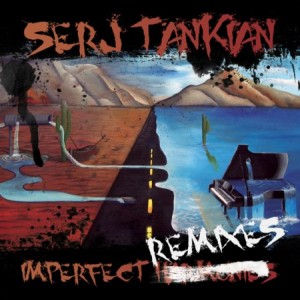
Serj Tankian Set To Release Imperfect Remixes EP March 1st
New Remix, “Goodbye – Gate 21,” Features Tom Morello
Pre-Sale Starts Today via iTunes

Singer, songwriter, multi-instrumentalist, political activist and System Of A Down frontman Serj Tankian is set to release the digital only Imperfect Remixes EP March 1st on Serjical Strike/Reprise Records.  The lead single, “Goodbye – Gate 21,” is a new remix and features Tom Morello (Rage Against The Machine, Audioslave) on guitar.  Look for an accompanying music video in the near future.  Additionally, the EP features remixes of tracks off his most recent solo release, Imperfect Harmonies.  Revolver gave Imperfect Harmonies four stars and raved that it “gets under your skin in ways Tankian’s music never did before.” It’s not the first time Morello & Serj have worked together; they co-founded the non-profit organization Axis Of Justice in 2002, which strives to bring together musicians, fans of music and grassroots political organizations to fight for social justice.

Imperfect Remixes EP Tracklisting

1. Goodbye – Gate 21 (Rock Remix featuring Tom Morello)
2. Reconstructive Demonstrations (Rock Remix)
3. Invisible Love – Deserving? (Electro Remix)
4. Goddamn Trigger – (iTunes Bonus Track)


iTunes Pre-Sale Link
WebFacebookTwitterMySpace


Scare Off Wolves by Blasting Creed February 2, 2011

Filed under: Can You Believe This?!,Too Cool for a Category — NVMP @ 1:14 AM

Review by Zach
On January 21st, 2011, a boy named Walter Eikrem was on his way home from school in Norwegia, in a town named Rakkestad.  Eikrem was on his normal route from the bus stop and noticed that four wolves had appeared on the path.  At the time, he was listening to music on his cell phone so he decided to blast the volume and started playing “Overcome” by Creed in hopes of scaring off the wolves.  He didn’t want to run because he knew if he did, the wolves would have run him down.  So he let the song play and the wolves dispersed.  “They didn’t really get scared,” Eikrem said.  “They just turned around and simply trotted away.”

Source: http://www.spiegel.de/international/zeitgeist/0,1518,740680,00.html

In summation: Don’t run away from a pack of hungry wolves, just flail your arms around, yell and blast Creed.  After all, if you heard someone blasting Creed, wouldn’t you turn the other way?


Dispatch: The Embodiment of “New Folk” Music December 31, 2010

Submitted By: Sean M. Davis

They made history at the Hatch Shell in 2004, sat upon the roof of their oldest companion in 2006: now, for 2011, Dispatch is planning something big, and I am eager to discover what it is!  The recent activity on dispatchmusic.com sparked a renewed interest in the band: who exactly is Dispatch and what is their influence on musical discourse?  Many critics and writers attempted to label Dispatch in the past, all failed.  They failed because Dispatch is not about arbitrary aesthetic labels, pre-determined by faceless record companies.  No, Dispatch is about making music, about bringing people together and, most of all, they are about originality in expression.  Maybe their music does not show the most erudite use of technique, but their songs have a sense of realness to them that much avant-garde music lacks.  One thing is certain of Dispatch: their resistance against anything mainstream, and eclectic musical background, makes their sound completely unique.

Perhaps the main reason Dispatch defies labels is because of their propensity to incorporate multiple styles and make them their own.  From reggae to hard-rock, nothing is taboo for Dispatch.  It is because of this eclectic style that I will finally attempt to classify this motley assortment of independent musicians.  First, let me begin by re-defining an over-referenced genre: folk music.  Most people think of folk music as the old-fashioned origins of styles like country or bluegrass, or as a specific genre referring to songwriters such as Bob Dylan or Joni Mitchell.  However, my definition of folk music encompasses a larger variety of musicians.  Folk is nothing more than original music produced by amateurs, usually expressing some kind of personal message or telling a story.  Folk traditions all over the world are influenced by the sounds and conventions of their geographical locations; many people think that because of the internet and mass media, real folk music is no longer possible.  This notion is absurd.  Just because the amount of music amateurs have access to blossomed in the past few decades does not mean that the sounds produced are more or less valid.  If anything, the sheer amount of styles artists have at their disposal provides a greater opportunity to create new and interesting music.  For these reasons I dub this music “new folk.”

If we accept my definition of “new folk,” groups like Dispatch are the quintessential examples of the style.  They incorporate sounds from as many musical idioms as they have come into contact with; then they turned it into something new.  Borrowing from other musical traditions is idiosyncratic of folk music, as is propounding a message of self-improvement.  Also, like Bob Dylan, Peter, Paul and Mary, Simon and Garfunkel and countless others before them, Dispatch often employs the fable as a musical-literary device.  Songs such as “The General,” “Flying Horses” and “Riddle” exemplify the use of fable in music.  This practice draws upon songs like Bob Dylan’s classic “Mr. Tambourine Man,” and Peter, Paul and Mary’s “Where have all the Flowers Gone?”  The difference is that Dispatch fuses the literary fable with a multitude of musical styles.

The “new folk” will continue to grow; with the iTunes age upon us there is no telling what kinds of music will emerge.  One can only hope that bands such as Dispatch surface through the rough and find their way into our ears.  We are no longer bound by the aesthetic chains of record companies; we can write the type of music that we want.  Even if Dispatch does not fit your ear, they proved that independent, amateur musicians can create powerful, thought-provoking music.

Check out Dispatch music at www.dispatchmusic.com


New Music…videos! November 30, 2010

Hi all!  I thought I would share some new music and videos with you because, who doesn’t like new music and videos?

First up is “CopCar” by Heypenny, a fun song with well put together video.  Who wants to be a CopCar with me for halloween next year?  Shotgun blue!  Also check out “Parade Song.”  Lots of OkGo vibes coming from this band, but it’s all gravy to me.

Following a similar theme, I thought I’d share the latest OkGo video…well, it was added November 15th but let’s live in the moment, shall we?  “Last Leaf” features laser toasted bread slices from 215 expired loaves.  Bet there was a lot of crumbs to clean up.

I wanted to share a band that I heard a few weeks back; they’re really growing on me.  A good indie/new wave mix, this Canadian band hits all the sweet spots.  I love “Come and See”, “The Alchemy Between Us”, and watch the video below for “Outside the City”.

I am so excited to share this song with you!  The second I heard “Paris” I was so surprised it was by Grace Potter and The Nocturnals.  In the past, I did not hear a song from the group that moved me like this one.  I can’t stop singing ‘Ooh la la’ and Potter’s raw vocals really bring this song full circle.

Another song I’m in love with is by The Knocks called “Dancing With the DJ”.  Check it out.
http://www.youtube.com/watch?v=d5B1es2MYXM&feature=related

– TNT


Happy Thanksgiving! November 25, 2010

Filed under: Too Cool for a Category — NVMP @ 8:06 PM

All of us at Nevermind the Posers would like to wish you and yours a very Happy Thanksgiving!

Enjoy a Thanksgiving tradition by watching Arlo Guthrie’s “Alice’s Restaurant” below…
http://www.youtube.com/watch?v=b8DtpdXZi0M&feature=related

or perhaps “The Thanksgiving Song” by Adam Sandler


A Word with Alan Wilder October 13, 2010

Filed under: Interviews,Too Cool for a Category — NVMP @ 8:03 AM

Many artists that NVMP covers find it difficult to establish themselves within the ever-changing and troubled music business.  As an established artist, do you find yourself experiencing the same problems?  What suggestions could you share with up and coming artists in navigating through the industry?

AW: I find I need to be very pro-active these days, in all aspects of what I do.  I can’t just sit back and wait for the record company to make it all happen, for CDs to just appear in shops, radio to just promote your music etc.  It just doesn’t happen without a lot of persuasion, networking, producing special editions and other enticements, plus being on the road which more and more artists find they have to do these days, not least to actually sell their wares at the live events.  The industry has massively changed – it’s a dog eat dog, cut-throat, here today, gone tomorrow, vacuous, Simon Cowell-obsessed animal, and it doesn’t suit everyone – particularly the whimsical ‘artistes’ that just don’t have that kind of drive required to perform the hard sell.

***Don’t forget, Recoil hits Highline Ballroom, NYC on November 1st.  And the after-show Depeche Mode/Recoil party!***